
Introduction
The Phu Quoc Islands are where Vietnam’s tropical dreams come to life—an archipelago defined by palm-lined shores, forested hills, quiet fishing villages, and an expanding collection of world-class resorts. At the center of it all lies Phu Quoc Island, a destination that has rapidly evolved from a sleepy coastal outpost into one of Southeast Asia’s most appealing island escapes.
Floating in the warm waters off southern Vietnam, Phu Quoc feels refreshingly different from the country’s bustling cities. Here, days are shaped by tides and sunsets rather than traffic and timetables. Travelers arrive for the beaches, but they stay for the atmosphere—easygoing, welcoming, and deeply connected to the natural world.
What makes the Phu Quoc Islands especially compelling is their balance. Modern comforts coexist with traditional livelihoods. Luxury resorts sit only minutes away from pepper farms and fishing harbors. You can snorkel coral reefs in the morning, explore jungle trails in the afternoon, and enjoy fresh seafood beneath glowing lanterns at night. Few destinations manage to blend development and authenticity so naturally.
This multi-part guide is designed to help you experience the Phu Quoc Islands in depth—from attractions and beaches to seasonal planning and itineraries. Before diving into the details, let’s begin with the foundations: where Phu Quoc is located, its evolution, and why it continues to attract global attention.
Overview of the Phu Quoc Islands
The Phu Quoc Islands form a compact yet diverse island group in the Gulf of Thailand, with Phu Quoc Island serving as the main hub for arrivals, accommodations, and attractions. Smaller surrounding islets are typically explored through snorkeling and island-hopping tours, adding layers of adventure to any visit.
Geographically, Phu Quoc lies closer to Cambodia than to mainland Vietnam, which subtly influences both its culture and cuisine. Seafood dominates local menus, while pepper cultivation and pearl farming remain important traditional industries. Despite the growth of tourism, large portions of the island are protected as a forest reserve, preserving tropical ecosystems that include waterfalls, wildlife habitats, and dense jungle.
For visitors, this creates a striking contrast. One moment, you may be relaxing on a manicured resort beach; the next, you are driving past quiet villages or walking along shaded forest paths. The island’s manageable size makes it easy to explore multiple landscapes in a single day, from coastlines to hilltops.
Accessibility has also played a major role in Phu Quoc’s popularity. Direct flights connect the island to major Asian cities, while ferries link it to southern Vietnam. Once on the island, well-maintained roads allow travelers to move comfortably between beaches, towns, and nature areas—whether by scooter, taxi, or private car.
Why the Phu Quoc Islands Are Gaining Global Attention
The rapid rise of the Phu Quoc Islands as an international destination did not happen by chance. Several factors have combined to place Phu Quoc firmly on the global travel map.
One of the island’s strongest advantages is ease of entry. Phu Quoc benefits from special visa arrangements for many nationalities, making spontaneous island getaways far simpler than in many parts of Southeast Asia. This accessibility has encouraged both short holidays and longer, slow-travel stays.
Accommodation options have expanded dramatically in recent years. Today, the Phu Quoc Islands offer everything from affordable guesthouses and boutique hotels to expansive beachfront resorts. This diversity attracts families, couples, solo travelers, and luxury seekers alike—each finding spaces that match their pace and budget.
Social media has also amplified Phu Quoc’s appeal. Images of turquoise bays, overwater cable cars, and glowing sunsets circulate widely, inspiring travelers to discover the island for themselves. Yet unlike many viral destinations, Phu Quoc still retains quieter corners where visitors can escape crowds and reconnect with nature.
Equally important is the variety of experiences available. Beyond swimming and sunbathing, travelers can explore fishing villages, hike forest trails, visit pagodas, snorkel offshore reefs, and sample vibrant street food. This blend of leisure and discovery gives the Phu Quoc Islands lasting appeal, encouraging repeat visits rather than one-time stops.
Brief History and Cultural Background
Before becoming a resort destination, the Phu Quoc Islands were shaped by the rhythms of the sea. Fishing communities formed the backbone of island life, relying on daily catches, fish sauce production, and small-scale agriculture. Pepper farming, in particular, became a defining feature of the local economy and remains a source of pride today.
Over time, Phu Quoc passed through different periods of regional influence before becoming part of modern Vietnam. During the twentieth century, the island played a strategic role in national history, traces of which can still be found at select heritage sites.
The past two decades brought significant change. Infrastructure improvements, an international airport, and increased investment transformed Phu Quoc into a tourism center. Yet traditional life continues alongside this development. Early mornings still see fishing boats returning to shore. Local markets remain gathering places for residents. Family-run eateries preserve recipes passed down through generations.
Culturally, the Phu Quoc Islands reflect both Vietnamese traditions and coastal island living. Visitors often notice a strong sense of community, warm hospitality, and a slower pace that encourages travelers to pause, observe, and truly unwind.
Geography, Climate, and Natural Landscape
Nature defines the identity of the Phu Quoc Islands. Much of the island’s interior is blanketed by tropical forest, protected within a national park that shelters diverse plant and animal species. Low mountains rise gently from the center, while the coastline alternates between long sandy beaches, rocky headlands, and hidden coves.
Surrounding waters support coral reefs and marine life, making snorkeling and boat excursions popular activities. Smaller offshore islands add further variety, offering quieter beaches and clearer waters for day trips.
Phu Quoc’s climate is tropical, with warm temperatures throughout the year. Instead of four traditional seasons, the island experiences a dry period and a rainy period, each shaping travel experiences in different ways. During drier months, seas are calmer and skies brighter; during wetter months, landscapes turn lush, and waterfalls become more active.
What makes Phu Quoc especially appealing is how close everything feels. Beaches, forests, villages, and viewpoints are all within short driving distances, allowing travelers to explore multiple environments without long journeys.
What Makes the Phu Quoc Islands Unique Compared to Other Vietnamese Destinations
Vietnam offers many beautiful coastal areas, but the Phu Quoc Islands stand apart for several reasons.
First, the island setting naturally creates a slower, more relaxed atmosphere. Life here feels lighter, with fewer crowds and more open space than in most mainland destinations.
Second, the scale of preserved nature is remarkable. Large sections of Phu Quoc remain undeveloped, supporting eco-tourism, forest exploration, and wildlife experiences that are increasingly rare in popular beach regions.
Third, Phu Quoc blends contemporary attractions with untouched scenery. Visitors can ride modern cable cars, enjoy polished resorts, and still find quiet beaches or jungle paths only minutes away.
Finally, the island appeals to a wide spectrum of travelers. Whether you are seeking romance, family fun, adventure, or peaceful solitude, the Phu Quoc Islands adapt easily to your travel style. This versatility is a key reason why Phu Quoc continues to grow in popularity while maintaining its laid-back charm.
Phu Quoc Attractions
The Phu Quoc Islands offer far more than beautiful beaches. Across Phu Quoc Island, travelers encounter a rich blend of rainforest landscapes, coastal communities, spiritual landmarks, modern leisure zones, and offshore islets. This diversity is what transforms a simple beach holiday into a layered island experience.
Rather than being concentrated in one area, Phu Quoc attractions are spread across the island—from forested hills in the north to island-hopping routes in the south. This layout naturally encourages exploration and makes every day feel different, whether you are drawn to nature, culture, or relaxed sightseeing.
Let’s explore the main attraction categories in detail.
Natural Attractions of the Phu Quoc Islands
Nature forms the backbone of Phu Quoc’s identity. Large sections of the island remain protected, allowing visitors to experience tropical forests, freshwater streams, coral reefs, and panoramic viewpoints—all within short driving distances.
Rainforest Trails and Hilltop Views at Phu Quoc National Park
Covering much of the island’s interior, Phu Quoc National Park protects rolling hills, dense jungle, and a wide range of native plant species. Even short walks here reveal towering trees, shaded paths, and birdsong that feels worlds away from the coastline.
Visitors can choose gentle forest strolls or longer hikes that lead to elevated viewpoints overlooking the island. During wetter months, small waterfalls appear along the trails, adding to the park’s appeal. Guided walks are available for travelers interested in learning about medicinal plants and local ecosystems, but independent exploration is also common on marked routes.
Early mornings are ideal for visiting the park, when temperatures are cooler and wildlife is more active. For many travelers, this forest experience provides a refreshing contrast to beach days.
Seasonal Waterfalls and Jungle Streams
Among the island’s freshwater attractions, Suoi Tranh Waterfall is the most accessible. Rather than a dramatic cascade, it features gentle rock terraces where water flows through forest surroundings.
These waterfall areas are especially enjoyable during and shortly after the rainy season, when streams are fuller, and vegetation appears vibrant. Visitors often combine short walks with picnics or relaxed swimming in shallow pools. Even when the water flow is light, the shaded setting makes this a pleasant stop for nature lovers.
Coral Reefs and Snorkeling Areas
The waters surrounding the Phu Quoc Islands support coral formations and tropical fish, making snorkeling a highlight for many visitors. Most snorkeling experiences are accessed via boat tours that travel to smaller offshore islands, where visibility is better, and reefs are healthier.
These half-day or full-day trips usually include multiple swim stops, equipment rental, and lunch either on board or on a quiet island beach. Even beginners feel comfortable joining, as guides provide clear instructions and safety briefings.
For travelers who want to experience Phu Quoc beyond land-based sightseeing, snorkeling offers a simple introduction to the island’s marine environment, while responsible operators emphasize reef protection and eco-friendly practices.
Coastal Viewpoints and Sunset Locations
Sunsets on the west coast of Phu Quoc are daily events that draw travelers to hilltops, beaches, and waterfront cafés. Elevated viewpoints provide sweeping perspectives over the sea, while long beaches offer front-row seats to shifting sky colors.
Some viewpoints are accessible by car or scooter, while others involve short uphill walks. Either way, watching the sun sink into the ocean becomes a favorite ritual for many visitors—a simple yet powerful reminder of the island’s natural beauty.
Cultural and Historical Attractions
While nature dominates much of Phu Quoc, the island’s communities and spiritual sites add meaningful cultural depth.
Fishing Villages and Coastal Life at Ham Ninh Fishing Village
Ham Ninh Fishing Village provides a glimpse into traditional island life. Wooden boats line the shoreline, seafood is brought in daily, and families continue generations-old fishing practices.
Visitors often stop here to walk along simple piers, observe daily routines, and enjoy freshly prepared seafood. Compared to resort areas, the village feels refreshingly authentic and provides valuable insight into how Phu Quoc functioned long before tourism arrived.
Spiritual Heritage at Ho Quoc Pagoda
Set on a hillside overlooking the sea, Ho Quoc Pagoda serves both as a place of worship and a scenic viewpoint. Its spacious courtyards and ocean-facing terraces invite quiet reflection, while traditional architecture reflects classic Vietnamese Buddhist design.
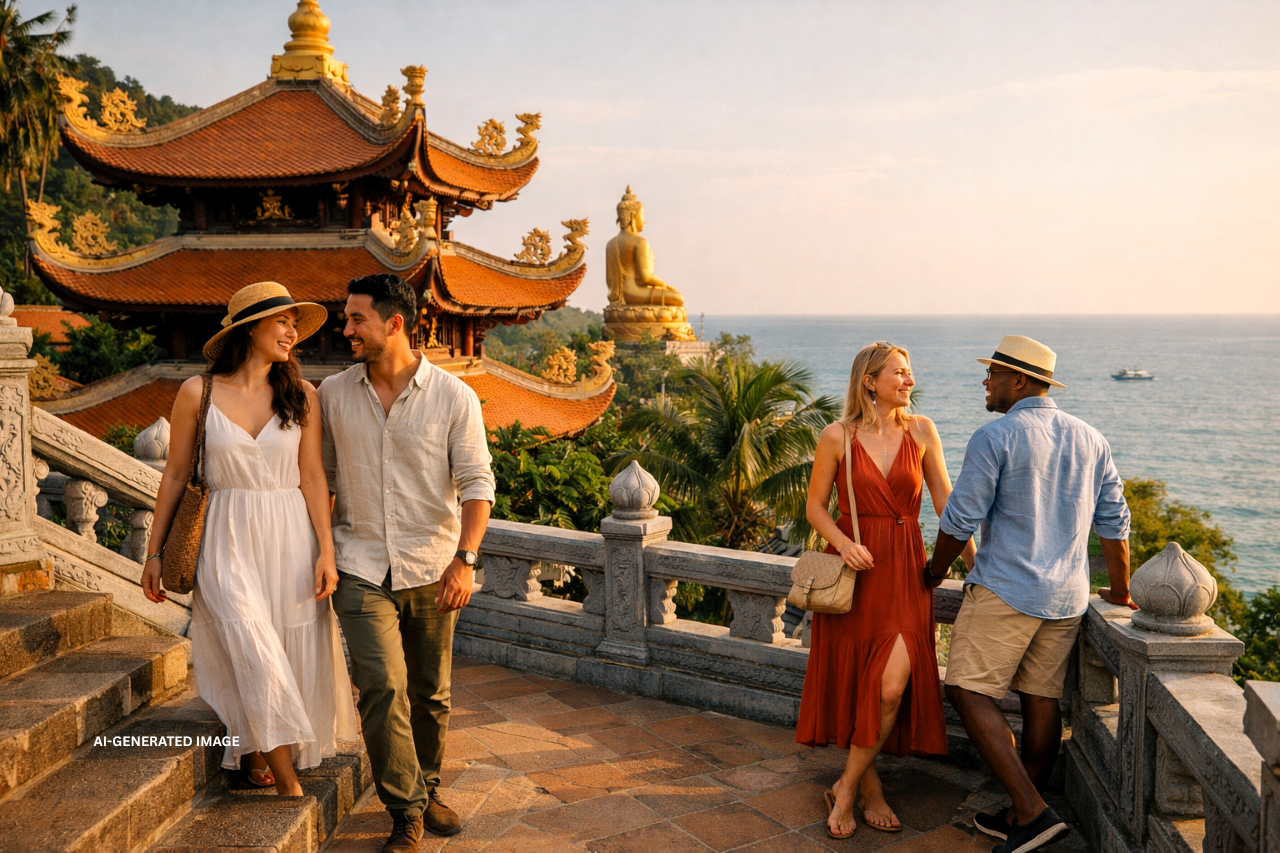
Travelers are welcome to explore respectfully, making this a popular stop for those seeking cultural understanding alongside panoramic coastal views.
Markets and Agricultural Traditions at Duong Dong Night Market
Duong Dong Night Market is the social heart of the island after dark. Food stalls, souvenir vendors, and dessert carts create a lively atmosphere where travelers sample grilled seafood and local sweets.
Beyond the market, pepper farms highlight one of Phu Quoc’s traditional industries. Visits typically include short tours explaining cultivation methods, followed by tastings or small shop stops—an easy way to connect with the island’s agricultural roots.
Modern and Entertainment Attractions
Recent development has introduced contemporary leisure options, expanding Phu Quoc’s appeal to families and activity-focused travelers.
Theme Parks and Wildlife Experiences
Northern Phu Quoc is home to VinWonders Phu Quoc and Vinpearl Safari Phu Quoc. VinWonders features rides, water attractions, and performance zones, while Vinpearl Safari operates as an open-style zoo with spacious animal habitats.
Together, these attractions provide full-day entertainment options and are especially popular with families and groups seeking variety beyond beaches and snorkeling.
Over-Sea Cable Car and Southern Islets
One of Phu Quoc’s most iconic experiences is the Hon Thom Cable Car, which glides over turquoise water toward Hon Thom Island. The ride delivers sweeping aerial views of reefs and islets, making it as memorable as the destination itself.
On Hon Thom Island, visitors can enjoy beach time, light snorkeling, and resort facilities. Many travelers consider this combination of transport and scenery a standout highlight of their trip.
Island-Hopping Across the Phu Quoc Archipelago
Island-hopping tours connect travelers with the smaller islets surrounding Phu Quoc. These excursions typically combine snorkeling stops, swimming breaks, and lunch on quiet beaches.
Each island offers something different—clearer water, coral gardens, or peaceful sands—allowing visitors to experience multiple environments in a single day. For many, island hopping becomes the most immersive way to appreciate the broader Phu Quoc Islands beyond the main coastline.
Wildlife Encounters and Eco-Tourism
Eco-conscious travel is increasingly emphasized across Phu Quoc. Forest walks, marine conservation efforts, and community-based tours encourage visitors to engage responsibly with local environments.
Several operators now focus on low-impact experiences that highlight wildlife protection and sustainable practices. These tours not only deepen appreciation for the island’s ecosystems but also support long-term preservation.
Phu Quoc Best Beaches
The beaches of the Phu Quoc Islands are the heart of island life. While Phu Quoc Island is often described as Vietnam’s premier beach destination, what truly sets it apart is the diversity of its coastline. From lively resort stretches to peaceful hidden coves, Phu Quoc offers beach experiences for every type of traveler.
Unlike smaller islands where most shores feel similar, Phu Quoc is large enough to develop distinct coastal personalities. Some beaches thrive on sunsets and social energy, while others invite solitude, slow walks, and quiet swims. This section explores Phu Quoc in detail, helping you decide exactly where to unwind.
Understanding Phu Quoc’s Coastal Layout
The shoreline of the Phu Quoc Islands wraps around much of the island, forming several unique beach zones.
The western coastline is the most developed and popular, featuring long sandy beaches with gentle waves and easy access to hotels, cafés, and tour services. This side also delivers the island’s famous sunsets.
The eastern coastline feels more rustic, with mangroves, fishing villages, and narrower beaches. Swimming is less common here, but sunrise views and quiet roads attract travelers seeking authenticity.
The northern region remains largely natural, bordered by forested hills and undeveloped coves, while the southern coast connects visitors to offshore islands and snorkeling areas. Together, these zones give Phu Quoc a surprisingly varied beach profile.
Long Beach – Energy, Convenience, and Sunset Views
Long Beach Phu Quoc stretches for several kilometers along the west coast and serves as the island’s main tourism hub. Most first-time visitors choose this area because it offers everything in one place—accommodations, restaurants, tour operators, and convenient airport access.
During the day, Long Beach is ideal for swimming and casual shoreline walks. The water is generally calm in the dry season, and the wide stretch of sand provides ample space even during busy periods.
As evening approaches, Long Beach transforms into one of the most atmospheric spots on the Phu Quoc Islands. Beach bars and seaside cafés fill with travelers watching the sky fade into shades of orange and purple. Whether you are enjoying cocktails, dining by candlelight, or simply sitting on the sand, sunset at Long Beach often becomes a daily ritual.
With its broad accommodation range—from budget hotels to luxury resorts—Long Beach suits families, solo travelers, and couples alike.
Sao Beach – Bright Sand and Gentle Water
Located on the southeastern coast, Sao Beach Phu Quoc is widely regarded as one of the most visually striking beaches on the island. Its powder-soft sand and shallow turquoise waters create a postcard-perfect setting.
São Beach is particularly popular for swimming thanks to its calm conditions. Palm trees provide natural shade, while small beachfront cafés offer fresh coconut drinks and simple seafood lunches.
Although it attracts day visitors, Sao Beach feels less commercial than Long Beach. Arriving early in the morning allows you to enjoy its beauty before tour groups arrive, making it an excellent choice for a peaceful start to the day.
Ong Lang Beach – Boutique, Calm and Natural Charm
North of Long Beach lies Ong Lang Beach, an area known for its relaxed atmosphere and boutique-style resorts. Rather than one continuous shoreline, Ong Lang consists of several smaller beaches separated by rocky sections and greenery.
This layout creates intimate pockets of sand where visitors can unwind away from crowds. Ong Lang is especially popular with couples and solo travelers who prefer calm surroundings over nightlife.
Sunsets here are just as beautiful as those on Long Beach, but with fewer people and more space. If your idea of a perfect beach involves reading, swimming, and listening to the waves rather than music, Ong Lang is an excellent choice.
Khem Beach – Southern Elegance and Clear Seas
On the southern edge of Phu Quoc sits Khem Beach, a crescent-shaped bay known for its clean shoreline and refined surroundings. The area has been developed with upscale resorts, landscaped paths, and well-maintained beachfront spaces.
Despite its polished feel, public access remains available, allowing independent travelers to enjoy the scenery. The water here is typically clear, making Khem Beach ideal for relaxed swimming and quiet afternoons.
Khem Beach works particularly well for travelers staying in southern resorts or those combining beach time with nearby attractions such as island tours and cable car excursions.
Vung Bau Beach – Wide Sands and Peaceful Isolation
For travelers seeking space and silence, Vung Bau Beach on the northwest coast offers a refreshing change. Long, open, and often uncrowded, Vung Bau feels far removed from Phu Quoc’s main tourist corridors.
Here, rustic resorts blend into palm forests, and wide stretches of sand invite uninterrupted walks. The sea is usually calm, making it suitable for swimming and floating in peaceful surroundings.
Vung Bau appeals to visitors who value simplicity and natural beauty over convenience and nightlife.
Discovering Hidden and Less-Crowded Beaches
Beyond the well-known names, the Phu Quoc Islands hide many smaller beaches that reward curious explorers. These spots are often reached via narrow roads or short forest paths and may not offer facilities such as cafés or loungers.
What they do provide is privacy. These lesser-known beaches are perfect for photography, quiet reflection, or simply enjoying the sound of waves without interruption. Renting a scooter or hiring a local driver makes it easier to uncover these secluded corners.
Asking residents for recommendations often leads to memorable discoveries, as locals are usually happy to share directions to their favorite quiet beaches.
Choosing the Best Beaches by Travel Style
Every traveler experiences Phu Quoc differently, and choosing the right beach can shape your entire trip.
Families
Long Beach and Sao Beach offer calm water, easy access, and nearby dining.
Couples and honeymooners
Ong Lang and Khem Beach provide romantic settings and peaceful evenings.
Budget travelers
Long Beach delivers the widest selection of affordable stays and street food.
Peace seekers
Vung Bau and northern hidden beaches suit travelers who prioritize silence and open space.
This range of options makes the Phu Quoc Islands remarkably adaptable, whether you seek activity or isolation.
Sunset Beaches vs Sunrise Beaches
Timing your day around the sun adds another layer to your beach experience.
The west coast beaches, including Long Beach and Ong Lang, are famous for sunsets. Each evening, travelers gather to watch the horizon glow as daylight fades into soft tropical colors.
The East Coast, while less developed, offers tranquil sunrise moments over fishing villages and mangrove-lined shores. Early mornings here reveal quiet roads, returning boats, and gentle light—perfect for photographers and early risers.
Many visitors build sunset watching into their daily routine, making it one of the most cherished rituals of their time on the Phu Quoc Islands.
Best Time to Visit Phu Quoc
Choosing the best time to visit the Phu Quoc Islands plays a major role in shaping your overall travel experience. Although Phu Quoc Island enjoys warm temperatures throughout the year, rainfall patterns, sea conditions, crowd levels, and accommodation prices vary noticeably by season.
Located in southern Vietnam, Phu Quoc follows a tropical climate rather than four traditional seasons. Instead, travel planning revolves around a dry period, a rainy period, and transitional shoulder months. Each phase brings its own character, and understanding these differences helps you align your visit with your personal travel goals.
Let’s explore Phu Quoc’s seasonal rhythm in detail.
Understanding Phu Quoc’s Tropical Climate
The Phu Quoc Islands maintain consistently warm weather year-round, with average daytime temperatures typically ranging between 25°C and 32°C (77°F–90°F). What changes most from month to month is rainfall intensity and ocean conditions.
Rather than spring, summer, autumn, and winter, Phu Quoc experiences:
-
A dry season, marked by sunshine and calm seas
-
A rainy season, characterized by higher humidity and short tropical showers
Rain rarely falls all day. Even during wetter months, mornings are often bright before afternoon clouds roll in. This allows travelers to enjoy outdoor activities with a flexible schedule.
Sea conditions also shift with the seasons. Dry months bring clearer water and gentler waves—ideal for swimming and snorkeling—while rainy months may produce rougher seas, especially along the west coast.
Peak Season in the Phu Quoc Islands (November to March)
For many travelers, this period represents the classic best time to visit Phu Quoc.
Weather During Peak Season
From November through March, the island typically enjoys:
-
Clear skies and abundant sunshine
-
Comfortable humidity levels
-
Calm ocean conditions
-
Minimal rainfall
These months provide excellent conditions for beach relaxation, island hopping, sunset watching, and sightseeing.
Tourism Levels and Costs
With excellent weather comes increased visitor numbers. During peak season:
-
Hotels and resorts fill quickly
-
Prices rise, particularly in December and January
-
Popular beaches such as Long Beach and Sao Beach feel noticeably busier
Reservations are strongly recommended, especially during international holiday periods.
Who Peak Season Is Best For
Peak season is ideal for:
-
First-time visitors to the Phu Quoc Islands
-
Families traveling with children
-
Couples planning romantic beach holidays
-
Travelers focused on water-based activities
If dependable sunshine is your top priority and your budget allows for higher rates, these months showcase Phu Quoc at its most polished.
Shoulder Season: April and October
Shoulder season bridges the gap between dry and rainy periods, offering an appealing balance between weather quality and visitor numbers.
April – Warm Seas and Fewer Crowds
April remains mostly dry but brings higher temperatures. It is one of the warmest months on the island, yet it remains excellent for swimming and snorkeling.
Reasons April works well:
-
Reduced crowds compared to winter
-
Slightly lower accommodation prices
-
Continued calm sea conditions
The main consideration is heat, as midday temperatures can feel intense. Early mornings and late afternoons are the most comfortable times for sightseeing.
October – Green Landscapes and Quiet Beaches
October marks the transition out of the rainy season. While occasional showers still occur, vegetation looks fresh and vibrant, and tourism gradually increases.
Advantages of visiting in October include:
-
Lush forests and flowing waterfalls
-
Fewer travelers than during peak season
-
Improving water clarity for snorkeling
For photographers and nature enthusiasts, October presents the Phu Quoc Islands at their most colorful.
Rainy Season / Low Season (May to September)
From May through September, the Phu Quoc Islands enter their wetter phase.
What Rainy Season Usually Feels Like
Rather than constant rain, the rainy season typically involves:
-
Short, heavy tropical showers
-
Bright mornings followed by afternoon rainfall
-
Occasional overcast days
June to August generally receives the highest rainfall, although weather patterns vary from year to year.
Advantages of Visiting During Low Season
Despite its reputation, the low season offers several meaningful benefits:
-
Significantly lower hotel rates
-
Quiet beaches and attractions
-
Dramatically green landscapes
-
A slower, more relaxed island atmosphere
Travelers who enjoy slow-paced journeys often find the rainy season surprisingly rewarding.
Possible Challenges
Low season does come with a few trade-offs:
-
Choppier seas may limit snorkeling trips
-
Some island tours operate less frequently
-
Outdoor plans may require flexibility
That said, many visitors appreciate experiencing the Phu Quoc Islands with fewer crowds and better value.
Month-by-Month Snapshot
Here is a simplified guide to help you choose the right travel window:
-
January–February: Cooler evenings, bright skies, peak tourism
-
March: Sunny with rising temperatures
-
April: Hot, mostly dry, quieter than winter
-
May: Start of rainy season, warm seas
-
June–July: Increased rainfall, peaceful beaches
-
August: Wettest period, lowest prices
-
September: Rain begins easing, lush scenery
-
October: Transition month with improving conditions
-
November: Return of dry weather, moderate crowds
-
December: Holiday atmosphere and peak demand
Best Time to Visit Phu Quoc by Traveler Type
Different visitors benefit from different seasons on the Phu Quoc Islands.
Beach Enthusiasts
November to March offers the clearest water and calmest seas.
Budget Travelers
May to September provides the best accommodation value.
Families
December through February delivers stable weather and full activity schedules.
Nature Lovers and Photographers
September and October showcase vibrant landscapes and dramatic skies.
Couples and Honeymooners
April and November balance privacy with pleasant conditions.
Local Holidays and Travel Timing
Vietnamese public holidays can influence visitor numbers. The most notable is Lunar New Year (Tet), which usually falls between January and February.
During Tet:
-
Domestic tourism increases
-
Transport becomes busier
-
Hotel prices rise
Traveling during Tet offers cultural insight but requires planning. Those seeking quieter experiences may prefer dates outside this period.
Final Thoughts on Choosing Your Travel Dates
There is no single universal answer to the best time to visit the Phu Quoc Islands—only the best time for your individual priorities.
Dry season delivers classic beach perfection. The rainy season offers peaceful surroundings and better prices. Shoulder months provide balance. Regardless of when you arrive, Phu Quoc rewards visitors with warm hospitality, scenic coastlines, and a relaxed island rhythm that encourages genuine rest.
By aligning your travel dates with your expectations—whether sunshine, savings, or solitude—you will experience Phu Quoc at its finest.
Phu Quoc Itinerary
Planning your days on the Phu Quoc Islands is one of the most enjoyable parts of preparing for your trip. With beaches, forests, villages, and offshore islands spread across Phu Quoc Island, the key is balance—combining relaxation with exploration without rushing from place to place.
This Phu Quoc itinerary section offers flexible travel plans for different lengths of stay, along with suggestions tailored to couples, families, solo travelers, and luxury visitors. Each itinerary is designed to showcase the island’s highlights while leaving space for spontaneous moments—often the most memorable part of island travel.
3-Day Phu Quoc Itinerary – Essential Island Highlights
This short itinerary is ideal for weekend breaks or quick tropical getaways, capturing the core experiences of the Phu Quoc Islands.
Day 1 – Arrival, Long Beach & Evening Market
Morning / Arrival
Arrive at Phu Quoc International Airport and transfer to your hotel. After settling in, begin your island experience with a relaxed walk along Long Beach Phu Quoc, the island’s most accessible stretch of sand. This gentle introduction helps you adjust to the tropical climate and slower pace.
Spend the late morning swimming or simply enjoying your first views of the Gulf of Thailand.
Afternoon
Head into Duong Dong town for lunch and light exploration. Browse small boutiques, cafés, and local shops before strolling along the waterfront.
Evening
As daylight fades, return to Long Beach to watch your first sunset—an unmissable ritual on the Phu Quoc Islands. Later, enjoy dinner and street snacks at Duong Dong Night Market, where grilled seafood and Vietnamese desserts create a lively nighttime atmosphere.
Day 2 – Southern Islands, Cable Car & Sao Beach
Morning
Join a half-day island-hopping tour from southern Phu Quoc. These excursions usually include snorkeling stops near small islets and coral patches, allowing you to experience the marine side of the Phu Quoc Islands.
Many tours also include a ride on the iconic Hon Thom Cable Car, which carries visitors above turquoise waters to Hon Thom Island. The sweeping aerial views alone make this journey unforgettable.
Afternoon
After returning to the main island, head to Sao Beach, Phu Quoc. Spend the afternoon swimming in shallow, clear water or relaxing beneath palm trees. Beachfront cafés serve light meals and refreshing drinks.
Evening
Return to your hotel area and keep the night relaxed—perfect for beachfront dining or a quiet stroll along the shore.
Day 3 – Pagoda Visit, Fishing Village & Departure
Morning
Begin your day with a visit to Ho Quoc Pagoda, where ocean-facing terraces provide a peaceful setting for reflection and photography.
Continue to Ham Ninh Fishing Village to observe traditional island life and enjoy simple seafood snacks by the water.
Afternoon
Return to your accommodation, pack, and transfer to the airport—bringing your short yet fulfilling Phu Quoc itinerary to a close.
5-Day Phu Quoc Itinerary – Balanced Exploration
In five days, you can enjoy beaches, culture, and nature at a comfortable pace.
Day 1 – Arrival & Long Beach
Follow Day 1 from the 3-day itinerary.
Day 2 – Cultural Discovery & Local Life
Spend the day exploring inland and coastal heritage:
-
Morning at Ho Quoc Pagoda
-
Lunch in Ham Ninh Fishing Village
-
Stop at a pepper farm to learn about local agriculture
-
Afternoon wandering Duong Dong town
End your day with sunset views at Long Beach.
Day 3 – Forest Scenery & Ong Lang Beach
Head north toward forested areas near Phu Quoc National Park for light hiking or scenic viewpoints. Later, relax at Ong Lang Beach, known for its calm atmosphere and beautiful sunsets.
Day 4 – Island-Hopping Adventure
Dedicate a full day to snorkeling and island hopping, combining swimming breaks with lunch on a quiet islet.
Day 5 – Sao Beach & Farewell Swim
Spend your final morning revisiting Sao Beach or enjoying one last swim before departure.
7-Day Phu Quoc Itinerary – Slow Island Travel
For travelers who prefer unhurried exploration, seven days allow deeper immersion.
Days 1–2
Arrival, Long Beach relaxation, Duong Dong town, Ho Quoc Pagoda, and Ham Ninh Fishing Village.
Day 3 – National Park & Ong Lang Beach
Combine forest scenery with a peaceful beach afternoon.
Day 4 – Southern Islands & Hon Thom
Island hopping paired with the cable car ride.
Day 5 – Khem Beach & Resort Day
Visit Khem Beach for tranquil swimming and refined surroundings, followed by spa or pool time at your resort.
Day 6 – Vung Bau or Hidden Beaches
Explore quieter shores such as Vung Bau Beach, ideal for long walks and relaxed swimming.
Day 7 – Free Morning & Departure
Leave your final morning open for souvenir shopping, last swims, or revisiting favorite spots.
Daily Travel Rhythm
Most days on the Phu Quoc Islands follow a comfortable pattern:
-
Morning: Beach walks, sightseeing, or tours
-
Afternoon: Relaxation or nature exploration
-
Evening: Sunset watching, dinner, and gentle nightlife
This rhythm helps conserve energy while maximizing enjoyment.
Phu Quoc Itineraries by Travel Style
Couples & Honeymooners
Ong Lang, Khem Beach, sunset dining, spa sessions, and boutique resorts.
Families
A Long Beach base, island tours, calm beaches, and optional theme park visits.
Solo Travelers
Duong Dong cafés, Ong Lang relaxation, scooter exploration, and group excursions.
Luxury Travelers
Southern resorts, private island trips, spa days, and Khem Beach lounging.
Practical Travel Guide
How to Reach Phu Quoc
Most travelers arrive via Phu Quoc International Airport, which handles frequent domestic flights and select regional connections. Flying is the fastest and most convenient way to reach Phu Quoc Island, and transfers from the airport to beach areas usually take less than 30 minutes.
If you are already traveling through southern Vietnam, ferries and speedboats operate from mainland ports such as Ha Tien and Rach Gia. Sea crossings typically last between 90 minutes and three hours, depending on weather conditions and vessel type.
One notable advantage of Phu Quoc is its special entry arrangement for many nationalities, allowing short visa-free stays when arriving directly. Be sure to confirm current entry requirements before you travel.
Getting Around the Island
Exploring the Phu Quoc Islands is straightforward, with several transport options to suit different travel styles:
-
Scooter rentals: The most popular choice for independent travelers. Main roads are generally smooth, especially along the west coast and between major beaches.
-
Taxis and ride services: Widely available and affordable for short journeys or evenings out.
-
Private drivers: A convenient option for families or groups who prefer door-to-door comfort.
-
Guided tours: Common for snorkeling, island hopping, and full-day sightseeing.
Scooters offer maximum freedom for discovering hidden beaches and viewpoints, while taxis are ideal for relaxed evenings after sunset.
Where to Stay in Phu Quoc
Accommodation across the Phu Quoc Islands ranges from simple guesthouses to five-star beachfront resorts. Choosing the right area can significantly shape your experience.
Long Beach area
Best for first-time visitors. Central, lively, and packed with restaurants, cafés, and tour operators.
Ong Lang area
Quieter and more boutique in feel. Ideal for couples and travelers who enjoy peaceful evenings.
Southern Phu Quoc
Home to upscale resorts near Khem Beach and the cable car terminal—perfect for luxury stays.
Northern Phu Quoc
More remote and nature-oriented, with easy access to forested areas and quieter beaches.
Whatever your budget, you will find options that match your preferences, from social beachfront hotels to eco-friendly retreats and private villas.
Food & Local Cuisine
Dining is one of the simplest pleasures of visiting the Phu Quoc Islands, especially for seafood lovers. Menus commonly feature:
-
Fresh prawns, squid, and reef fish
-
Steamed clams and crab prepared with local herbs
-
Vietnamese noodle soups and rice dishes
-
Tropical fruit platters and coconut-based desserts
Phu Quoc is also known for its aromatic pepper, which appears in many local recipes and adds a distinctive flavor to island cuisine.
Evenings often revolve around Duong Dong Night Market, where visitors wander between stalls sampling grilled seafood, sweets, and snacks. For quieter dining, beachfront restaurants along Long Beach and Ong Lang serve Vietnamese classics alongside international favorites, often paired with sunset views.
Budget Planning for Phu Quoc
Daily expenses on the Phu Quoc Islands vary depending on travel style:
-
Budget travelers: Guesthouses, street food, scooter rentals, and shared tours keep costs low.
-
Mid-range travelers: Comfortable hotels, regular dining out, and guided excursions create a balanced budget.
-
Luxury travelers: Beachfront resorts, private transfers, spa treatments, and tailored experiences come at premium rates.
Compared with many international island destinations, Phu Quoc remains excellent value, particularly during the shoulder and rainy seasons when accommodation prices drop noticeably.
Practical Tips for a Smooth Trip
A few simple preparations can make your stay even more enjoyable:
-
Money: Vietnamese Dong is widely used, and ATMs are available in main towns.
-
Connectivity: Mobile data works well across most of the island, and hotels provide Wi-Fi.
-
Health: Pack sunscreen, insect repellent, and basic medication.
-
Temple visits: Dress modestly when entering pagodas.
-
Scooter safety: Always wear a helmet and drive carefully, especially after rain.
-
Environmental care: Avoid touching coral, minimize plastic waste, and respect natural areas.
The Phu Quoc Islands are generally safe, including for solo travelers. Basic awareness and respectful behavior go a long way.
Conclusion
The Phu Quoc Islands bring together everything travelers seek in a tropical escape: inviting beaches, lush forests, cultural encounters, and modern comforts, all wrapped in a relaxed island atmosphere.
From sunset walks along Long Beach to quiet mornings on hidden shores, from snorkeling offshore reefs to wandering fishing villages, Phu Quoc offers experiences that feel both diverse and unhurried. You can fill your days with adventure or allow them to unfold slowly—the island supports both approaches with ease.
What makes Phu Quoc especially memorable is its balance. Development has introduced convenience and luxury, yet large parts of the island remain peaceful and green. Add warm local hospitality and flavorful cuisine, and it becomes clear why so many visitors return.
If you are seeking a destination that blends discovery with downtime, the Phu Quoc Islands deliver—inviting you to slow down, explore widely, and savor every coastal moment.
FAQs
Is Phu Quoc suitable for first-time visitors to Vietnam?
Yes. The Phu Quoc Islands are beginner-friendly, offering easy transport, solid tourist infrastructure, and a relaxed pace that suits first-time travelers.
How many days should I spend in Phu Quoc?
Three days provide a quick overview, but five to seven days allow time for beaches, attractions, island hopping, and proper relaxation.
Is Phu Quoc expensive?
Phu Quoc caters to all budgets. While luxury resorts are available, affordable accommodation and local dining make it accessible for most travelers.
Can you swim year-round in Phu Quoc?
Swimming is best during the dry season when the seas are calm. In rainy months, west coast waves can be stronger, though sheltered areas may still be suitable.
Do I need a visa to visit Phu Quoc?
Many nationalities can enter Phu Quoc visa-free for short stays when arriving directly. Always confirm current regulations before booking.
Is Phu Quoc family-friendly?
Absolutely. Calm beaches, island tours, and family-oriented attractions make the island suitable for travelers with children.
What are the must-see highlights in Phu Quoc?
Popular stops include Ho Quoc Pagoda, Sao Beach, Ong Lang Beach, island-hopping tours, and forest areas near Phu Quoc National Park.
Which month is best for visiting Phu Quoc?
December to March offers the most reliable weather, while April and October balance pleasant conditions with fewer crowds.
Can I explore Phu Quoc without organized tours?
Yes. Renting a scooter or hiring a driver allows independent exploration. Tours are mainly helpful for snorkeling and offshore islands.
Is Phu Quoc safe for solo travelers?
Yes. The island is generally safe and welcoming, with easy navigation and friendly local communities.