
Introduction
Borobudur Temple Indonesia is one of the most remarkable cultural and spiritual landmarks ever created. Rising quietly from the green heartland of Central Java, this ancient Buddhist monument is the largest of its kind in the world. More than just a temple, Borobudur is a monumental expression of philosophy, faith, and artistic mastery, carved entirely from stone more than a millennium ago.
For centuries, Borobudur Temple in Indonesia remained hidden beneath layers of volcanic ash and dense jungle, almost forgotten by history. Today, it stands proudly as a symbol of Indonesia’s rich heritage and spiritual depth. Recognized as a UNESCO World Heritage Site, Borobudur attracts visitors from every continent, including a growing number of travelers from the United States who seek meaningful cultural experiences beyond conventional tourism.
What truly sets Borobudur apart from other ancient monuments is its purpose. The temple was not designed merely as a place of worship, but as a three-dimensional spiritual guide. Each level represents a stage in the Buddhist path toward enlightenment, allowing pilgrims to physically and mentally journey from the world of desire to ultimate liberation.
This in-depth guide explores Borobudur Temple in detail—its location, origins, architecture, and spiritual symbolism—providing readers with a complete understanding of why this extraordinary monument continues to inspire awe more than 1,200 years after its construction.
Where Is the Borobudur Temple Located?
The setting of the Borobudur Temple plays a crucial role in its spiritual and cultural significance. The temple’s location was carefully selected to align with natural elements that ancient Javanese civilizations considered sacred.
Geographic Location in Central Java
Borobudur Temple is situated in Magelang Regency, within Indonesia’s Central Java province. It lies approximately 40 kilometers northwest of Yogyakarta, a city renowned for its arts, traditions, and historical importance.
The temple rests in a wide valley surrounded by fertile farmland and framed by towering volcanoes such as Mount Merapi, Mount Merbabu, Mount Sumbing, and Mount Sindoro. This dramatic natural setting was intentionally chosen, as mountains were believed to be the dwelling places of spiritual forces in ancient Javanese belief systems.
Nearby rivers, including the Progo and Elo, further enhance the symbolic purity of the site. Water, an essential element in Buddhist philosophy, represents renewal and the flow of life—concepts that harmonize perfectly with the spiritual purpose of Borobudur Temple.
Borobudur’s Place in Java’s Cultural Landscape
Borobudur Temple is not an isolated monument. It forms part of a sacred alignment with Mendut Temple and Pawon Temple, suggesting that ancient pilgrims once followed a ceremonial route between these sites during religious observances.
Central Java has long been a meeting point of indigenous traditions, Hindu beliefs, and Buddhist teachings. Borobudur reflects this cultural fusion, blending local artistic styles with Mahayana Buddhist philosophy. Even today, the temple remains deeply connected to surrounding communities and serves as a national symbol of Indonesia’s historical and spiritual identity.
History of Borobudur Temple
The story of Borobudur Temple is one of ambition, devotion, disappearance, and rediscovery. Despite its enormous size and complexity, the monument vanished from public memory for centuries.
Origins and Construction (8th–9th Century)
Borobudur Temple was constructed during the 8th and early 9th centuries, under the rule of the Sailendra Dynasty, a powerful Buddhist kingdom that once dominated Central Java. Although no detailed written records describe its construction, historians estimate that the project required several decades of labor and the coordination of thousands of skilled workers.
More than two million blocks of volcanic stone were used, all carefully shaped and assembled without mortar. Each stone was precisely cut and locked into place, demonstrating advanced knowledge of engineering and structural stability.
The builders designed Borobudur as a massive stepped monument that rises gradually toward the sky. Every element—from its base to its summit—was intended to represent Buddhist teachings and guide worshippers along a sacred spiritual path.
Religious and Political Context
During the Sailendra era, Buddhism flourished alongside Hinduism in Java. Borobudur Temple served as a major center for Mahayana Buddhist practice, pilgrimage, and learning.
The construction of such a monumental structure also carried political significance. By commissioning Borobudur, the Sailendra rulers reinforced their legitimacy and spiritual authority while demonstrating devotion to Buddhist ideals. The temple symbolized a powerful union of religious belief and royal influence.
Abandonment and Rediscovery
By the 14th century, Borobudur Temple was gradually abandoned. Shifts in political power, the spread of Islam across Java, and repeated volcanic eruptions all contributed to its decline. Over time, the monument was buried beneath ash and thick vegetation, fading into local legend.
Borobudur remained hidden until 1814, when it was rediscovered during the British colonial period under the direction of Sir Thomas Stamford Raffles. Excavation efforts revealed the monument’s immense scale and artistic brilliance, marking the beginning of Borobudur’s return to global recognition.
Architectural Design and Layout of Borobudur Temple
Borobudur Temple is widely regarded as one of the most sophisticated architectural achievements of the ancient world. Its design is both mathematically precise and deeply symbolic.
Mandala-Based Structure
The temple is laid out in the form of a mandala, a sacred geometric diagram used in Buddhist meditation. When viewed from above, Borobudur reveals a symmetrical pattern representing the universe according to Buddhist cosmology.
The structure consists of nine stacked levels—six square terraces at the base and three circular platforms at the top—culminating in a central stupa. This upward progression reflects the spiritual ascent from the material world toward enlightenment.
The Three Spiritual Realms of Borobudur
Borobudur Temple is divided into three symbolic realms:
-
Kamadhatu (Realm of Desire): The lowest level represents human attachment and the moral consequences of actions.
-
Rupadhatu (Realm of Form): The middle terraces symbolize discipline, learning, and spiritual development.
-
Arupadhatu (Formless Realm): The upper circular platforms represent transcendence and freedom from worldly illusion.
As pilgrims ascend the temple, they symbolically leave behind earthly concerns while moving closer to spiritual liberation.
Advanced Engineering and Drainage System
One of the most impressive aspects of Borobudur Temple is its hidden drainage system. Hundreds of stone spouts and channels were integrated into the structure to protect the monument from heavy monsoon rains.
This remarkable engineering has allowed Borobudur to withstand centuries of earthquakes and tropical weather, preserving its form far beyond what might be expected for a stone monument of its age.
Symbolism and Buddhist Philosophy at Borobudur Temple
Borobudur Temple is far more than a physical structure—it is a stone embodiment of Buddhist philosophy.
Buddhist Cosmology Through Architectural Movement
The act of walking around each level of Borobudur, known as circumambulation, was designed as a meditative practice. Pilgrims traditionally move clockwise, reflecting Buddhist beliefs about harmony with the natural order of the universe.
Each level represents a step in spiritual growth, transforming the temple into an interactive path toward enlightenment rather than a static monument.
Buddha Statues and Sacred Hand Gestures
Borobudur Temple contains more than 500 Buddha statues, each positioned with specific hand gestures known as mudras. These gestures symbolize teachings such as meditation, compassion, fearlessness, and wisdom.
Together, these statues form a visual guide to Buddhist philosophy, reinforcing Borobudur’s role as a sacred educational and spiritual space.
Relief Panels of Borobudur Temple – A Stone Chronicle of Life and Faith
One of the most intellectually fascinating aspects of Borobudur Temple is its vast collection of stone relief panels. These carvings transform the monument into a massive open-air library, where stories, teachings, and social history are recorded not with ink but with stone.
Stretching across corridors and terraces, the reliefs were intentionally placed along the pilgrimage route. As devotees walked clockwise around each level, they encountered a continuous visual narrative designed to educate, inspire, and guide them spiritually. In total, Borobudur contains more than 2,600 relief panels, making it one of the most extensive narrative sculptural works in the world.
Jataka Tales and Buddhist Teachings in Stone
A large number of the relief panels at Borobudur Temple illustrate episodes from the Jataka Tales, which recount the previous lives of the Buddha before his final birth as Siddhartha Gautama. These stories emphasize moral virtues such as generosity, compassion, patience, wisdom, and self-sacrifice.
Rather than presenting abstract philosophy, the carvings depict relatable stories involving kings, merchants, monks, animals, and ordinary people. Each scene demonstrates how ethical choices influence future outcomes, reinforcing the Buddhist concept of karma.
For ancient pilgrims—many of whom were unable to read—these visual narratives served as moral instruction. In this way, Borobudur Temple functioned not only as a sacred monument, but also as a powerful educational tool.
Scenes from Everyday Life in Ancient Java
Beyond religious narratives, Borobudur Temple offers extraordinary insight into daily life in 8th-century Java. The relief panels depict farming activities, maritime trade, architectural styles, clothing, musical instruments, court ceremonies, and village life.
Ships carved into the stone reveal advanced seafaring knowledge, suggesting that Java played an active role in regional and international trade networks. Market scenes, royal processions, and domestic activities provide historians with invaluable information about social structure and economic life.
Through these carvings, Borobudur preserves a detailed visual record of a civilization that might otherwise have been lost to time.
The Stupas and Buddha Statues of Borobudur Temple
As pilgrims ascend toward the upper terraces of Borobudur Temple, the emphasis gradually shifts from narrative storytelling to abstract symbolism. The stupas and Buddha statues dominate this final stage of the spiritual journey.
The Central Stupa – Symbol of Ultimate Enlightenment
At the summit of Borobudur Temple stands a massive central stupa. Unlike many stupas that enclose relics or statues, this one is intentionally empty. This design represents nirvana, a state beyond suffering, attachment, and illusion.

The emptiness of the central stupa reflects a profound Buddhist concept: true enlightenment cannot be expressed in physical form. Instead, it symbolizes completeness through spiritual realization rather than material presence.
Perforated Stupas and Cultural Legends
Surrounding the central stupa are 72 perforated stupas, each housing a seated Buddha statue. The lattice-like stone design allows light and air to pass through, symbolizing the transition from the world of form to the realm of formlessness.
Over time, local legends developed suggesting that touching the Buddha statues could bring good fortune. While modern conservation rules prohibit physical contact, these stories continue to add an element of mysticism to Borobudur Temple and reflect the deep emotional connection visitors feel toward the monument.
Borobudur Temple is a UNESCO World Heritage Site
International recognition of Borobudur Temple reached a major milestone in 1991, when it was officially designated a UNESCO World Heritage Site. This status acknowledges the monument’s exceptional cultural, historical, and spiritual significance.
Reasons for UNESCO Recognition
Borobudur Temple was granted UNESCO status due to several outstanding qualities:
-
Its unparalleled scale as a Buddhist monument
-
The sophistication of its architectural and symbolic design
-
The completeness and clarity of its narrative reliefs
-
Its influence on later religious architecture in Southeast Asia
UNESCO considers Borobudur a masterpiece that represents one of the highest achievements of human creativity and spiritual expression.
International Restoration and Conservation Efforts
By the mid-20th century, Borobudur Temple faced serious threats from erosion, water infiltration, and structural instability. To prevent irreversible damage, UNESCO launched a major international restoration project between 1975 and 1982.
This ambitious effort involved dismantling large sections of the monument, strengthening the foundations, improving drainage systems, and carefully reassembling millions of stone blocks. Experts from multiple countries collaborated to ensure that both structural safety and historical authenticity were preserved.
The success of this project remains one of the most significant achievements in global heritage conservation.
Best Time to Visit Borobudur Temple
Choosing the right time to visit Borobudur Temple greatly influences the quality of the experience.
Seasonal Weather Patterns
Indonesia has a tropical climate characterized by two main seasons:
-
Dry Season (May to October): This period offers clearer skies, lower humidity, and more comfortable temperatures, making it the most popular time to visit Borobudur.
-
Rainy Season (November to April): The surrounding landscape becomes lush and green, but rainfall and mist may limit visibility.
Most international visitors, particularly travelers from the United States, prefer the dry season for optimal sightseeing conditions.
Sunrise Visits vs Daytime Entry
Sunrise visits to Borobudur Temple are especially popular due to the peaceful atmosphere and dramatic scenery. As the sun rises, soft light gradually reveals the stupas against a backdrop of mist and distant volcanoes, creating a deeply spiritual experience.
Daytime visits, although busier, allow for closer examination of the relief panels and architectural details under brighter light. Each option offers a distinct and rewarding perspective.
Borobudur Sunrise Tour Experience
The sunrise tour has become one of the most iconic ways to experience Borobudur Temple.
Why Sunrise at Borobudur Is Special
Early morning silence, cool air, and panoramic views create an atmosphere that closely aligns with the temple’s original spiritual purpose. Visitors often describe the experience as meditative, peaceful, and emotionally moving.
The gradual illumination of the stupas, combined with drifting mist in the surrounding valley, makes sunrise tours particularly appealing to photographers and spiritual travelers.
Booking and Access Information
To protect the monument, sunrise access is strictly regulated. Visitor numbers are limited, and booking through authorized providers is required. Guided supervision and special attire are often included to ensure respectful and sustainable visitation.
Entry Fees, Dress Code, and Visitor Guidelines
Borobudur Temple operates under strict regulations designed to minimize wear and preserve the monument.
Ticket Categories and Pricing
Entrance fees vary for domestic and international visitors. Sunrise tickets are sold separately and are typically priced higher due to limited availability and controlled access.
Dress Code and Visitor Etiquette
Visitors must dress modestly, covering their shoulders and legs. Approved footwear is provided on-site to protect the stone surfaces. Respectful behavior is essential, as Borobudur remains an active place of worship.
How to Reach Borobudur Temple
Despite its rural location, Borobudur Temple is easily accessible for travelers.
Traveling from Yogyakarta
Yogyakarta serves as the primary gateway. Visitors can reach Borobudur by taxi, private car, bus, or guided tour, with an average travel time of one to one and a half hours.
International Access for Overseas Travelers
Most international visitors arrive in Indonesia via Jakarta or Bali before taking a domestic flight to Yogyakarta. From there, transportation to Borobudur is well organized and tourist-friendly.
Nearby Attractions Around Borobudur Temple
Exploring the surrounding area enhances the overall travel experience.
Mendut and Pawon Temples
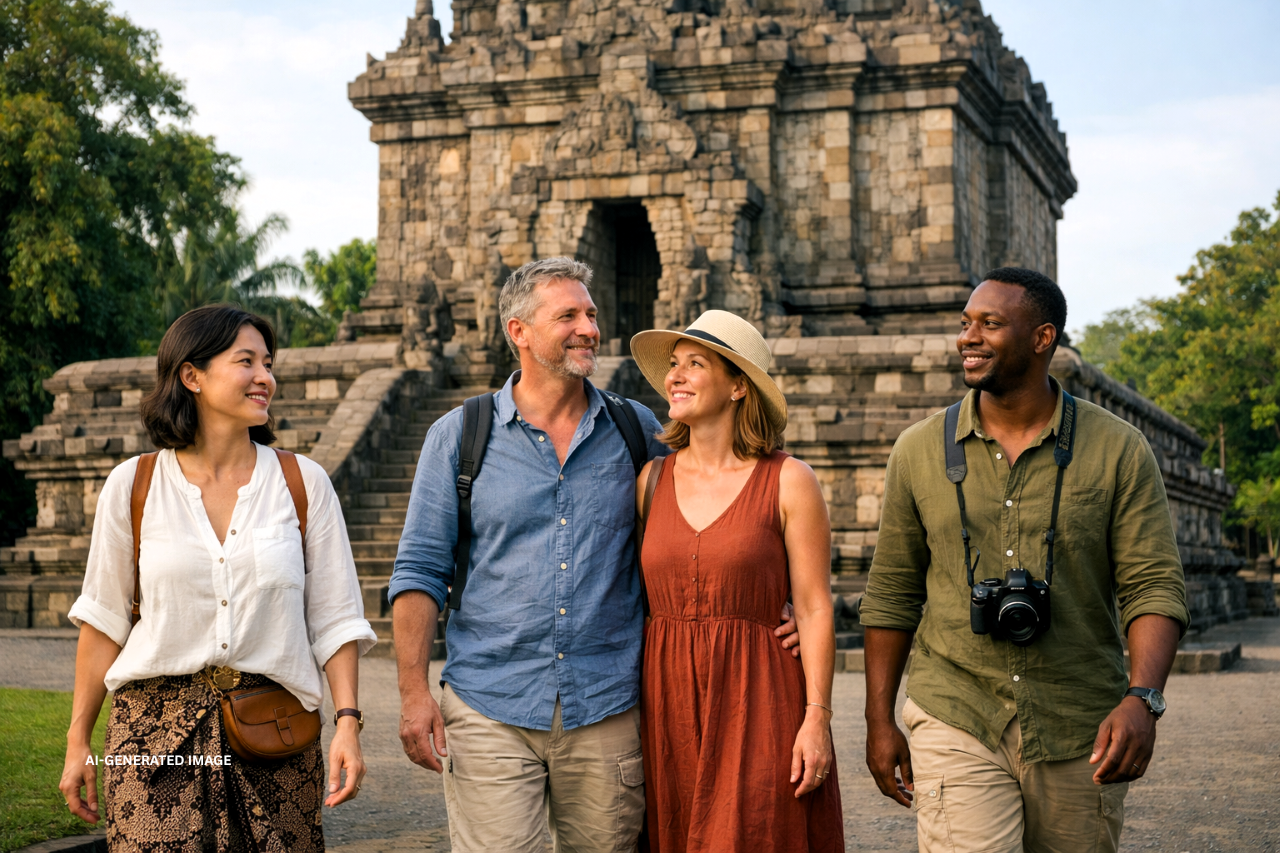
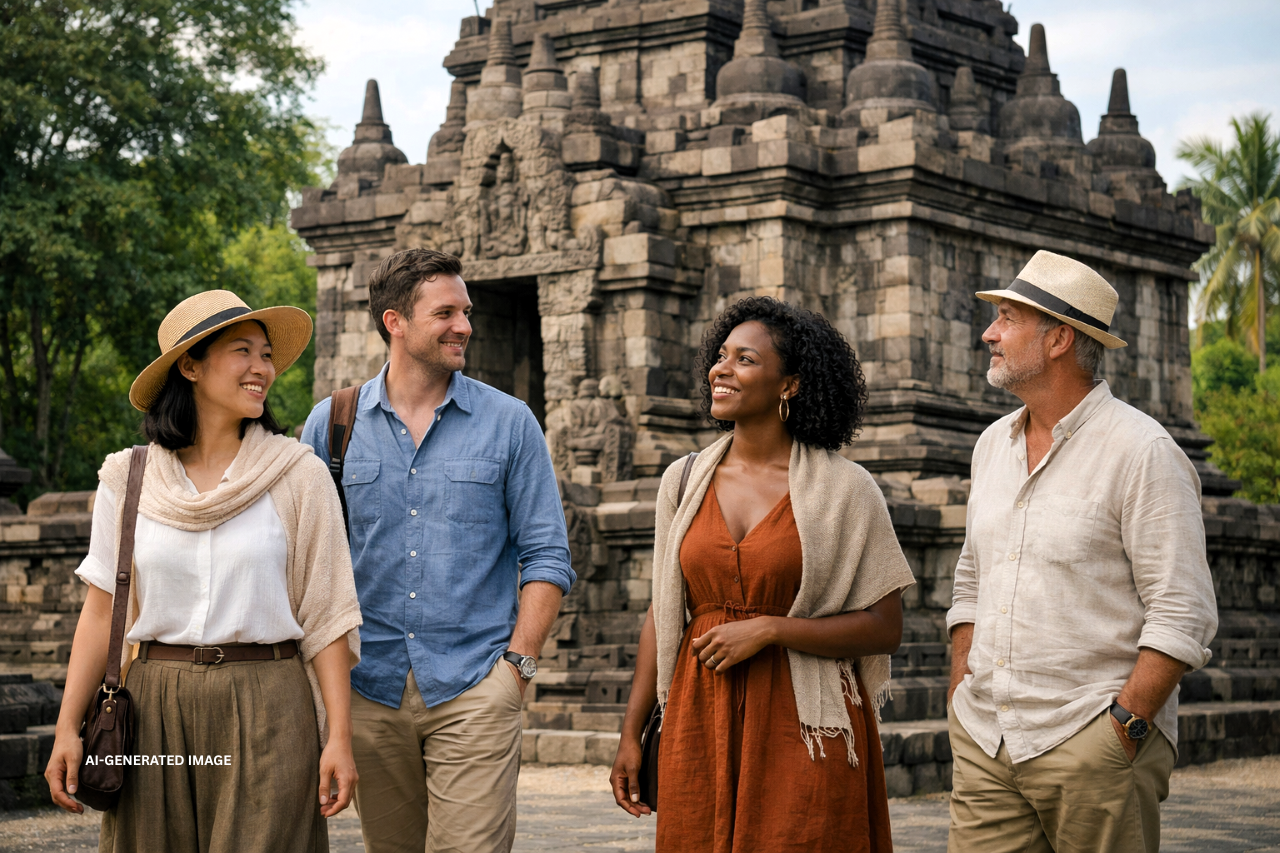
Mendut and Pawon temples form a spiritual triangle with Borobudur and are believed to have played a role in ancient pilgrimage rituals. Mendut Temple is particularly notable for its large seated Buddha statue.
Mendut Temple
Pawon Temple
Local Villages and Cultural Experiences
Nearby villages offer opportunities to experience traditional crafts, rural lifestyles, cycling tours, and small museums that highlight Javanese culture and history.
Festivals and Religious Ceremonies at Borobudur
Borobudur Temple remains a living spiritual site that continues to host important religious and cultural events.
Vesak Day Celebrations
Vesak is the most important Buddhist festival at Borobudur, commemorating the birth, enlightenment, and passing of the Buddha. Thousands of monks and pilgrims gather for prayers, processions, and lantern ceremonies.
Cultural and Tourism Events
Throughout the year, Borobudur hosts cultural festivals, heritage programs, and art performances that celebrate Indonesia’s traditions and promote sustainable tourism.
Essential Travel Tips
Visiting Borobudur Temple is a deeply rewarding experience, but thoughtful preparation can significantly enhance both comfort and understanding. As one of Indonesia’s most carefully protected heritage sites, Borobudur follows strict visitor management practices designed to preserve the monument while offering meaningful access.
Practical Photography Tips at Borobudur
Borobudur Temple offers exceptional photographic opportunities, but capturing its beauty requires patience and planning. Early morning light is ideal, particularly during sunrise sessions, when soft hues reveal intricate stone textures and create dramatic silhouettes of stupas against misty hills.
Late afternoon provides warmer tones and fewer crowds, allowing for broader architectural compositions. Visitors should note that drone photography is strictly prohibited, and tripods may be restricted during peak hours. Adhering to these guidelines ensures the safety and long-term preservation of the monument.
Photographers are encouraged to focus not only on wide panoramic views but also on finer details—Buddha statues, relief panels, and stone patterns that showcase the temple’s extraordinary craftsmanship.
Responsible and Sustainable Tourism Practices
Borobudur Temple faces ongoing conservation challenges due to age, climate conditions, and high visitor numbers. Responsible tourism plays a crucial role in protecting this sacred site.
Visitors are expected to:
-
Follow designated walking routes
-
Avoid touching carvings or statues
-
Wear protective footwear provided by the site authorities
-
Maintain respectful silence in spiritual zones
Supporting local guides, staying in nearby villages, and purchasing locally made handicrafts also contribute to sustainable tourism and community development around Borobudur.
Why Borobudur Temple Is a Must-Visit Destination
Few places in the world offer the depth of meaning found at Borobudur Temple. The monument is not merely observed—it is experienced. Each level invites reflection, each carving conveys a lesson, and each stupa symbolizes spiritual ascent.
Borobudur’s universal appeal lies in its ability to resonate with a wide range of visitors. History enthusiasts admire its age and engineering, spiritual seekers find peace in its symbolism, and travelers are captivated by its dramatic setting amid volcanoes and fertile plains.
For international visitors, particularly those from the United States, Borobudur Temple represents a gateway into Southeast Asia’s spiritual and cultural legacy—far removed from commercial tourism and deeply rooted in timeless human values.
Conclusion
Borobudur Temple stands as a powerful testament to humanity’s capacity for creativity, devotion, and philosophical insight. Constructed more than a thousand years ago, this monumental Buddhist structure continues to inspire awe through its scale, symbolism, and serene presence.
From its mandala-based architecture and narrative relief panels to its silent stupas and surrounding volcanic landscape, Borobudur embodies a harmonious balance between nature, spirituality, and human ingenuity. Its survival through centuries of neglect and natural challenges underscores its cultural resilience and global importance.
A visit to Borobudur Temple is not simply a journey to an ancient site—it is an invitation to slow down, reflect, and connect with ideas that transcend time and place. For travelers seeking depth, meaning, and authenticity, Borobudur remains one of the world’s most profound destinations.
FAQs
Is Borobudur Temple older than Angkor Wat?
Yes. Borobudur Temple dates back to the 8th and 9th centuries, while Angkor Wat was constructed in the early 12th century, making Borobudur significantly older.
How much time should visitors plan for Borobudur Temple?
Most visitors spend between two and three hours exploring the temple. Sunrise tours may take longer due to guided access and scheduled entry times.
Can non-Buddhists visit Borobudur Temple?
Yes. Borobudur welcomes visitors of all beliefs. While it is a Buddhist monument, its cultural, historical, and artistic value is universal.
Are visitors allowed to climb Borobudur Temple?
Access policies vary to protect the monument. Visitors are typically permitted on certain levels under supervision, depending on current conservation guidelines.
Is Borobudur Temple safe for solo travelers?
Yes. The site is well managed, secure, and suitable for solo travelers, including women. Clear signage and on-site staff assistance are readily available.
Why is Borobudur Temple famous worldwide?
Borobudur is globally renowned for being the largest Buddhist temple in existence, its intricate stone reliefs, its deep spiritual symbolism, and its UNESCO World Heritage status.
What makes the Borobudur sunrise tour unique?
Sunrise tours offer a peaceful atmosphere, limited visitor numbers, and breathtaking views of the temple illuminated by early morning light, making them especially popular among international travelers.