
Introduction
The Amritsar Golden Temple, globally known as Sri Harmandir Sahib, is one of the most admired spiritual landmarks in the world. Located in the vibrant and culturally rich city of Amritsar in Punjab, the Golden Temple attracts millions of visitors every year—pilgrims, travelers, heritage enthusiasts, and those seeking inner peace. The moment you step into its expansive marble complex, a deep sense of calm begins to surround you. The golden sanctum, shimmering under the sun by day and glowing ethereally at night, rests gently in the middle of the Amrit Sarovar, creating a surreal reflection that looks almost heavenly.
The soothing sound of Gurbani, the aroma of incense, the humble devotion of visitors, and the profound spiritual atmosphere make the Amritsar Golden Temple an unforgettable experience. This article offers a complete, meticulously detailed travel guide—covering the temple’s history, architecture, spiritual importance, nearby attractions, practical travel tips, and insights to help you enjoy a meaningful journey to this sacred destination.
Overview of the Golden Temple (Sri Harmandir Sahib)
The Amritsar Golden Temple is the holiest shrine of Sikhism and represents the core principles of the Sikh faith—equality, devotion, humility, and universal brotherhood. Unlike most temples built on raised platforms, the Golden Temple was constructed below ground level, symbolizing humility and the belief that genuine spiritual growth begins with modesty.
One of its most distinctive architectural choices is the presence of four entrances, facing all directions. These doors signify that people from every background, nationality, or faith are welcome. Visitors enter the inner sanctum through the Darshani Deori and walk across a narrow marble causeway that symbolizes an intentional journey toward spiritual awareness.
The temple remains open nearly 24 hours a day, allowing visitors to experience its serene ambience at any time. Within the complex lies the remarkable Guru-ka-Langar, one of the world’s largest community kitchens, serving free meals to tens of thousands of people daily. Entirely volunteer-driven, the langar reflects Sikhism’s philosophy of seva (selfless service) and the belief that all individuals are equal in the eyes of God.
Amritsar Golden Temple History
The history of the Amritsar Golden Temple is rich, profound, and filled with moments that shaped Sikh identity. More than a place of worship, the Golden Temple stands as a symbol of resilience, devotion, and cultural evolution.
Foundation and Vision of Guru Arjan Dev Ji
The Golden Temple’s foundation was laid by Guru Arjan Dev Ji, the fifth Sikh Guru, who envisioned a sanctuary that welcomed all of humanity. His idea was to create a place of spiritual refuge where anyone—regardless of religion, community, or social standing—could experience peace.
Guru Arjan Dev Ji personally supervised the construction of the Amrit Sarovar and later laid the foundation stone of the temple. The design, featuring a sanctum located below ground level and accessible from four directions, emphasized inclusivity and humility—two essential virtues of Sikh philosophy.
Construction of the Amrit Sarovar (Holy Pool)
The sacred pool surrounding the temple is known as the Amrit Sarovar, which translates to “Pool of Nectar.” This water body is central to the Golden Temple’s identity and significance. The city’s name—Amritsar—is derived from this sacred pool.
The excavation of the sarovar began during the leadership of Guru Ram Das Ji, the fourth Sikh Guru, and it soon became a place for meditation and introspection. Devotees believe that spending time near the Amrit Sarovar brings spiritual clarity, peace, and emotional healing. The gentle reflections of the sanctum in the serene water enhance the temple’s beauty and tranquility.
Architectural Evolution Through the Centuries
Over centuries, the Golden Temple underwent several phases of expansion and renovation. A defining moment came in the early 19th century when Maharaja Ranjit Singh, the leader of the Sikh Empire, ordered the upper part of the sanctum to be covered with sheets of pure gold. This extraordinary enhancement eventually gave the shrine its famous name—the “Golden Temple.”
Despite repeated destruction during Mughal and Afghan invasions, the Sikh community rebuilt the temple with remarkable resilience and devotion. Every restoration strengthened its significance and deepened its emotional connection with the Sikh community.
The Golden Temple in Modern Times
Today, the Amritsar Golden Temple stands as one of the world’s most respected spiritual institutions. Its immaculate cleanliness, disciplined organization, and volunteer-driven services have earned universal admiration. With millions of visitors arriving from around the globe, the temple continues to inspire people through its message of service, humility, and unity.
Its peaceful environment, architectural beauty, and commitment to selfless service make it an unforgettable spiritual destination for travelers of all backgrounds.
Spiritual Significance of the Golden Temple
The spiritual aura of the Amritsar Golden Temple goes far beyond its architectural charm. Every practice, sound, and ritual inside the temple complex is deeply connected to Sikh ideology and devotion.
Guru Granth Sahib – The Eternal Guru
At the heart of the Golden Temple lies the Guru Granth Sahib, the holy scripture of Sikhism and the community’s eternal Guru. Devotees gather throughout the day to listen to the kirtan (musical recitation of hymns) that fills the complex with divine resonance.
The daily Palki Sahib Ceremony, where the Guru Granth Sahib is carried between the sanctum and the Akal Takht, is one of the most uplifting spiritual rituals. The chanting, rhythmic prayer, and profound respect shown during this process create a deeply moving experience.
Langar – The World’s Largest Community Kitchen
The langar at the Amritsar Golden Temple is one of the world’s most extraordinary examples of community service. Operating throughout the day, this massive kitchen feeds thousands of people—irrespective of religion, nationality, or socioeconomic background.
Volunteers tirelessly chop vegetables, roll rotis, prepare lentils, serve meals, and wash utensils. Sitting together on the floor in long rows symbolizes the Sikh belief that all humans are equal. The langar embodies humility, compassion, and unconditional service.
Unique Sikh Practices and Traditions at the Temple
Visitors to the Golden Temple experience several powerful traditions, including:
-
Continuous kirtan is performed inside the sanctum
-
The distribution of Karah Prasad, a warm and sacred sweet offering
-
Devotees participating in seva—cleaning, cooking, assisting visitors, and more
-
Peaceful meditation along the parikrama around the Amrit Sarovar
-
Maintaining silence and respect inside the sanctum and its surroundings
Together, these practices create a deeply spiritual environment that encourages reflection, humility, and inner peace.
Architecture of the Golden Temple
The Amritsar Golden Temple is celebrated not only for its spiritual importance but also for its remarkable architectural sophistication. Every aspect of its structure—the marble pathways, the gilded sanctum, the sacred pool, and the detailed engravings—reflects a harmonious fusion of artistic traditions and deep symbolism. The temple’s design embodies the Sikh values of inclusiveness, equality, and humility.
By combining elements from Hindu, Islamic, and Rajput architectural styles, the Golden Temple stands as a timeless example of India’s cultural amalgamation. The beauty of the shrine is not limited to its golden appearance; it lies in the thoughtful way it brings together multiple artistic influences to create one of the world’s most iconic religious monuments.
Blend of Hindu, Islamic, and Rajput Styles
One of the most striking features of the Amritsar Golden Temple is its seamless blend of diverse architectural traditions.
-
Islamic elements can be seen in the arches, marble inlay work, domes, and delicate lattice screens.
-
Hindu influences appear in the symbolic motifs, wall designs, and decorative floral patterns.
-
Rajput craftsmanship is visible in the chhatris, balconies, and carved façades.
These influences come together beautifully, giving the Golden Temple a unique identity that reflects centuries of cultural harmony.
Sanctum (Harmandir Sahib) Structure
The sanctum, known as the Harmandir Sahib, sits at the center of the Amrit Sarovar and is the most sacred part of the temple complex. Its structure is divided into two principal levels.
✅ Ground Floor
-
Houses the revered Guru Granth Sahib
-
Features detailed marble carvings
-
Contains exquisite pietra dura inlay work
-
Showcases symbolic artwork inspired by nature and spirituality
✅ Upper Floors
-
Covered in sheets of pure gold added during Maharaja Ranjit Singh’s reign
-
Home to ancient manuscripts and sacred relics
-
Topped with an inverted lotus-shaped golden dome representing spiritual liberation
The sanctum’s radiant glow during sunrise and the soft illumination at night make it one of the most visually captivating sights in India.
Amrit Sarovar (Sacred Pool)
Surrounding the temple is the serene Amrit Sarovar, whose still waters enhance the overall spiritual atmosphere. The name “Amritsar,” the city itself, is derived from this sacred pool.
Visitors often sit or walk along the marble parikrama around the sarovar for quiet reflection. The tranquil sound of Gurbani, combined with the shimmering reflection of the sanctum, creates a calming environment ideal for meditation and contemplation.
Causeway Bridge and Darshani Deori
The Darshani Deori serves as the entrance to the pathway leading to the sanctum. It features impressive architectural detailing and acts as the symbolic threshold between the physical world and the realm of spiritual awakening.
A narrow causeway bridge connects the Darshani Deori to the sanctum. The act of walking across this bridge encourages visitors to slow down, reflect, and prepare themselves mentally for darshan.
Akal Takht
Directly opposite the sanctum stands the Akal Takht, the highest seat of Sikh temporal authority. Established by Guru Hargobind Sahib Ji, it represents justice, courage, and leadership.
Together, the Harmandir Sahib and the Akal Takht illustrate the balance between spiritual and worldly responsibilities, a principle central to Sikh philosophy.
Best Time to Visit Amritsar Golden Temple
The Amritsar Golden Temple is open throughout the year, but the overall experience depends on the season, crowd levels, and local festivals. Knowing the best time to visit will help you plan a comfortable and meaningful trip.
Winter (October–March)
Winter is the most preferred season to visit Amritsar.
-
Temperatures stay between 5°C and 18°C
-
Skies are clear, and the air is crisp
-
Perfect for extended temple visits
-
Excellent lighting for photography
The Golden Temple looks exceptionally beautiful in the soft winter light.
Summer (April–June)
Amritsar can get very hot during the summer, but the temple remains a rewarding experience.
To avoid the heat:
-
Visit before sunrise
-
Explore the temple in the late evening
At night, the Amritsar Golden Temple appears breathtakingly radiant under the illuminated golden lights.
Monsoon (July–September)
Monsoon brings refreshing showers and a calmer ambience.
-
The temple complex looks rejuvenated after the rain
-
Evening walks around the sarovar become pleasant
-
Fewer tourists ensure a quieter visit
However, rain may occasionally affect outdoor travel plans.
Best Days and Times for a Peaceful Visit
For a serene experience:
-
Visit between Monday and Thursday
-
Arrive early in the morning (4:00 a.m.–7:00 a.m.)
-
Choose late evenings (9:00 p.m.–midnight) for beautiful nighttime views
During these hours, the chants of Gurbani feel especially soothing.
Special Events and Festivals
Festivals add a vibrant charm to the Golden Temple experience.
✅ Vaisakhi
Celebrates the Punjabi harvest season and the birth of the Khalsa.
✅ Guru Nanak Gurpurab
Includes grand decorations, devotional music, and processions.
✅ Diwali & Bandi Chhor Divas
The temple glows with thousands of lights and lamps, offering spectacular views.
✅ Martyrdom Day of Guru Arjan Dev Ji
Observed with deep reverence, prayers, and kirtan.
During festivals, the temple complex becomes exceptionally lively and spiritually uplifting.
Things to Do at the Amritsar Golden Temple
A visit to the Amritsar Golden Temple includes far more than darshan. Many profound experiences await those who explore the traditions, rituals, and community spirit that define this sacred site.
Attend the Palki Sahib Ceremony
The Palki Sahib ceremony, held twice daily, is one of the most spiritually powerful events at the Golden Temple.
During this ceremony:
-
The Guru Granth Sahib is carried in a beautifully decorated palanquin
-
Devotees chant hymns in unison
-
A deep sense of devotion fills the complex
Witnessing this ceremony offers a rare insight into Sikh rituals and reverence.
Walk Around the Parikrama Path
The marble parikrama surrounding the Amrit Sarovar is ideal for peaceful walks.
Visitors enjoy:
-
Sitting quietly by the water
-
Listening to live kirtan
-
Admiring the temple’s reflection in the pool
-
Watching devotees perform prayers
The parikrama offers some of the best perspectives of the sanctum.
Experience the Langar (Community Kitchen)
The langar is a defining feature of Sikhism and one of the Golden Temple’s most humbling experiences.
-
Food is simple, nutritious, and vegetarian
-
Volunteers prepare, serve, and wash dishes
-
Everyone sits together, symbolizing equality
Participating in or eating at the langar reflects the Sikh principle of selfless service.
Visit the Central Sikh Museum
Situated near the temple entrance, the museum displays:
-
Historical paintings
-
Portraits of Sikh leaders
-
Ancient manuscripts
-
Rare artifacts and weapons
The museum provides deeper insight into Sikh history and its cultural legacy.
Take Night Photographs of the Golden Temple
Nighttime photography at the Golden Temple is a rewarding experience.
-
The golden dome glows brilliantly
-
The reflections in the sarovar look mesmerizing
-
The peaceful ambience enhances the beauty of the shrine
These nighttime visuals rank among the most stunning scenes in India.
Do Seva (Voluntary Service)
Seva is a fundamental aspect of Sikhism, and visitors are encouraged to participate.
Common forms of seva include:
-
Washing dishes
-
Cutting vegetables
-
Cleaning the temple premises
-
Serving food in the langar
-
Helping elderly visitors
-
Sorting footwear at the shoe counters
Performing seva fosters humility and creates a meaningful connection to the temple’s spiritual essence.
Places to Visit in Amritsar (Beyond the Golden Temple)
Amritsar offers several cultural, historical, and patriotic attractions that complement your visit to the Golden Temple. These sites help you explore the city’s vibrant heritage and rich past.
Wagah Border Ceremony
Located near the India-Pakistan border, the Wagah Border is famous for its energetic Beating Retreat ceremony.
You can expect:
-
Patriotic music
-
Synchronized marching by Indian and Pakistani soldiers
-
Large cheering crowds
-
A dramatic flag-lowering ritual
Arrive at least 1.5–2 hours early for the best seats.
Jallianwala Bagh
Jallianwala Bagh is a historic memorial dedicated to the victims of the 1919 massacre.
Key features include:
-
Preserved bullet marks
-
Martyrs’ Well
-
Memorial inscriptions
-
Light and sound show (evenings)
It is a profoundly emotional place that highlights India’s struggle for freedom.
Partition Museum
The Partition Museum documents the heartbreaking stories from the 1947 partition.
Inside, you will find:
-
Personal belongings
-
Archival documents
-
Photographs
-
Audio testimonies
-
Recreated historical settings
This museum provides a powerful look into one of the biggest migrations in human history.
Durgiana Temple
Durgiana Temple resembles the architecture of the Golden Temple and is dedicated to Goddess Durga.
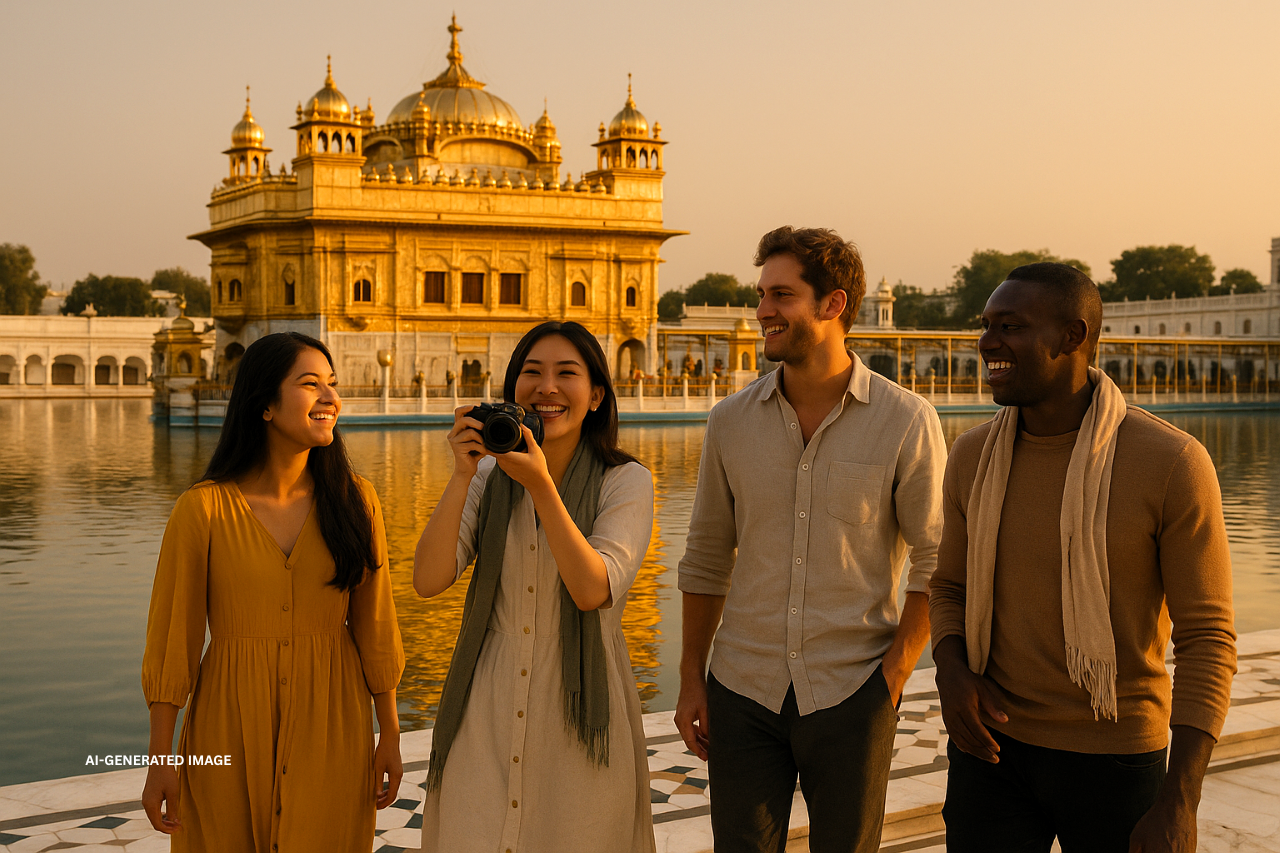
It features:
-
A peaceful lake
-
Intricate marble work
-
Beautiful silver doors
-
Serene evening aarti
It is a must-visit for those interested in cultural and architectural parallels.
Gobindgarh Fort
A lively heritage site offering a blend of history and entertainment.
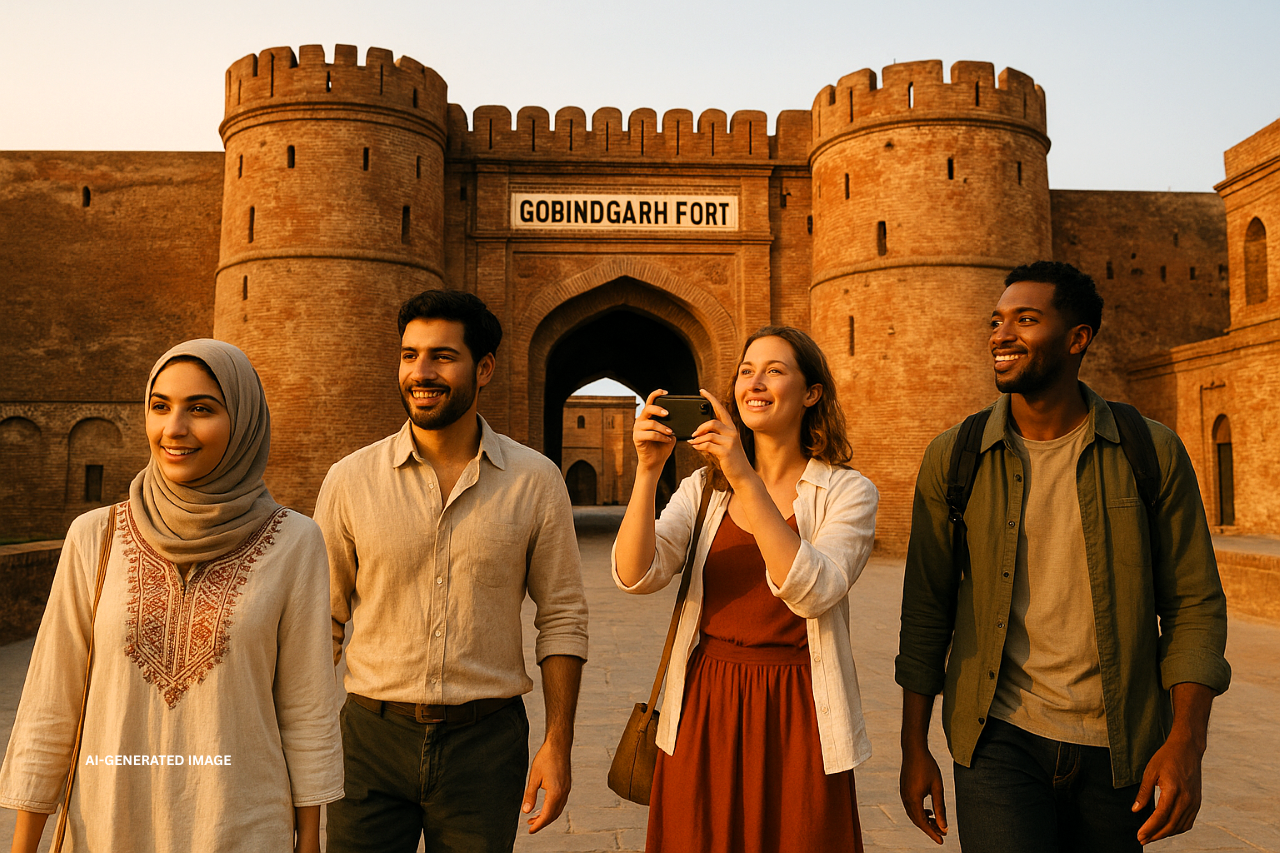
Here you can explore:
-
The 7D Sher-e-Punjab show
-
Museum exhibits
-
Live cultural performances
-
Punjabi food stalls
-
Traditional crafts
The fort brings Punjab’s vibrant spirit to life.
Hall Bazaar
One of Amritsar’s oldest and busiest markets, great for:
-
Phulkari embroidery
-
Punjabi juttis
-
Handicrafts
-
Spices and sweets
-
Souvenirs
It is a colorful shopping area filled with local culture.
Maharaja Ranjit Singh Museum
This museum honors the founder of the Sikh Empire.
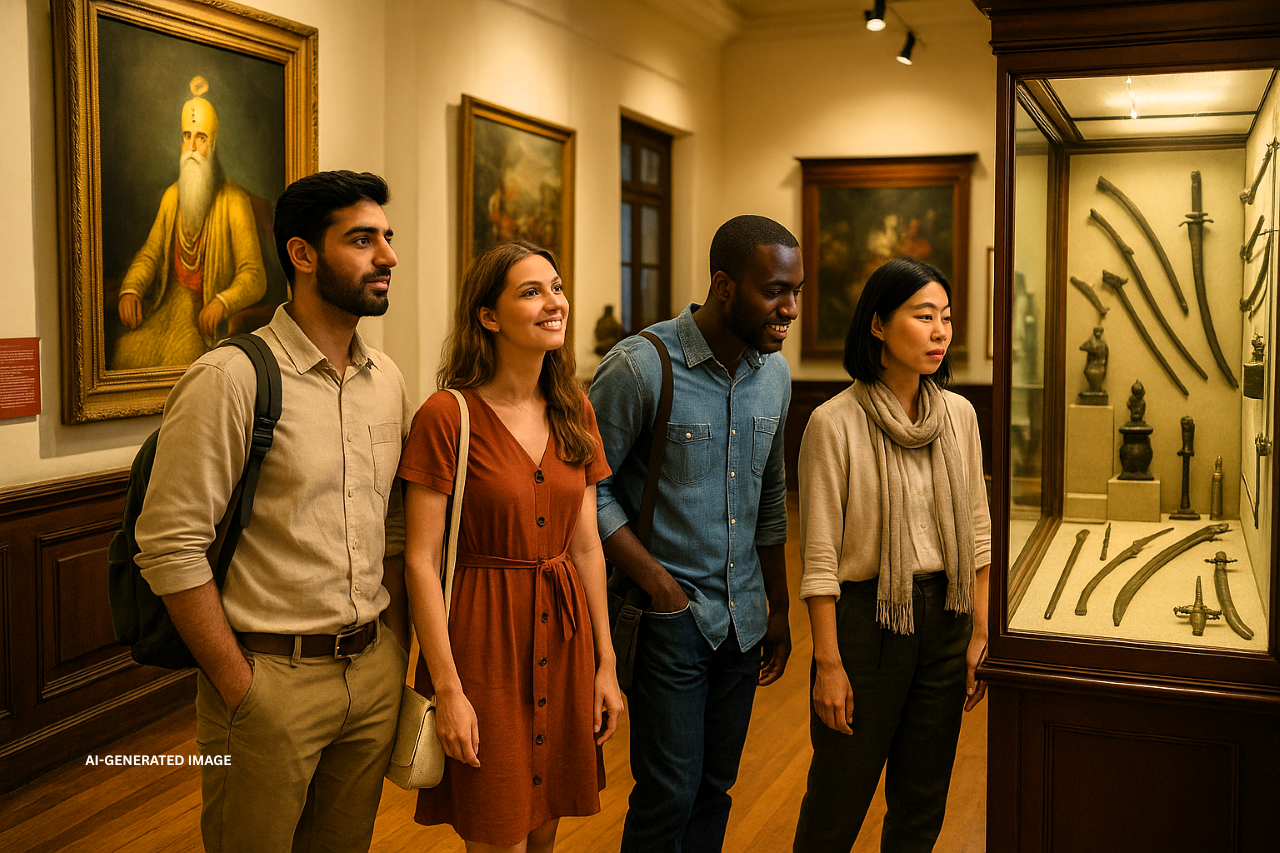
Exhibits include:
-
Weapons
-
Coins
-
Paintings
-
Historic documents
-
Personal possessions of Maharaja Ranjit Singh
It offers a valuable insight into the life of the “Lion of Punjab.”
Sadda Pind
A cultural village recreating traditional Punjabi rural life.
Visitors can enjoy:
-
Folk dances and music
-
Village games
-
Authentic Punjabi cuisine
-
Craft workshops
-
Cultural storytelling
It is one of the best places to experience Punjab’s lively traditions and hospitality.
Amritsar Itinerary (1–3 Days)
Planning your trip to the Amritsar Golden Temple becomes much easier when you follow a well-organized itinerary. Whether you have one day, two days, or three, Amritsar offers a rich blend of spirituality, heritage, culture, and cuisine. The following itineraries are designed to give you a complete and memorable experience.
1-Day Itinerary – The Essentials of Amritsar
If you only have one day to explore Amritsar, you can still cover the city’s most iconic attractions. This itinerary balances spiritual experiences, historical insights, delicious food, and a patriotic evening.
✅ 4:00 a.m. – 8:00 a.m.: Sunrise Visit to the Amritsar Golden Temple
Begin your day early to experience the temple during Amrit Vela, the sacred pre-dawn hours.
During this time:
-
The atmosphere is calm and peaceful
-
Gurbani hymns echo beautifully across the complex
-
The golden sanctum glistens as the sun rises
-
The reflection on the Amrit Sarovar creates a serene, magical scene
After darshan, take a slow walk along the parikrama and spend a few quiet moments by the water.
✅ 8:00 a.m. – 9:00 a.m.: Traditional Amritsari Breakfast
Head to the nearby lanes of Old Amritsar for a hearty breakfast.
Popular dishes include:
-
Amritsari kulcha served with chole
-
Creamy lassi
-
Paneer bhurji or paneer tikka
-
Freshly made parathas with white butter
These classic dishes reflect the bold and authentic flavors of Punjab.
✅ 9:15 a.m. – 10:00 a.m.: Visit Jallianwala Bagh
A short walk from the temple brings you to Jallianwala Bagh, an important memorial that preserves the memory of the 1919 massacre.
Here, you can see:
-
The preserved bullet marks
-
The Martyrs’ Well
-
The eternal flame
-
Informational plaques and memorial walls
The site leaves a powerful impact on visitors and highlights India’s struggle for independence.
✅ 10:15 a.m. – 12:00 p.m.: Partition Museum
Spend your late morning exploring the Partition Museum, which documents the events, emotions, and experiences surrounding the 1947 partition.
Inside, you’ll find:
-
Personal belongings of refugees
-
Archival photos
-
Recorded testimonies
-
Historic letters and documents
-
Detailed exhibits explaining the migration and its aftermath
It is an emotional and enlightening experience.
✅ 12:15 p.m. – 1:30 p.m.: Lunch Break
Amritsar is known for its irresistible food culture.
For lunch, try:
-
Amritsari fish fry
-
Sarson da saag with makki di roti
-
Chole bhature
-
Dal makhani
-
Special Amritsari lassi
Local restaurants and dhabas serve some of the finest Punjabi dishes.
✅ 3:00 p.m. – 7:00 p.m.: Wagah Border Ceremony
Leave for the Wagah Border early to secure good seats for the ceremony.
The Beating Retreat includes:
-
Synchronized marching
-
Enthusiastic patriotic chants
-
A symbolic lowering of the flags
-
Electrifying energy in the crowd
The ceremony showcases the discipline and pride of both nations’ soldiers.
✅ 8:00 p.m. – 10:00 p.m.: Night Darshan at the Golden Temple
End your day with a nighttime visit to the Amritsar Golden Temple.
After sunset:
-
The shrine glows with golden illumination
-
The reflection in the sarovar becomes even more captivating
-
The ambience is peaceful and spiritually uplifting
Night darshan is often considered the most beautiful time to experience the temple.
2-Day Itinerary – Balanced Cultural Exploration
A two-day trip allows you to enjoy the spiritual core of Amritsar while exploring its cultural and historical depth.
✅ Day 1: Follow the 1-Day Itinerary
Your first day covers the most essential attractions.
✅ Day 2: Explore Additional Cultural and Historical Sites
Durgiana Temple:
Designed similarly to the Golden Temple but dedicated to Goddess Durga, this temple offers a peaceful environment and stunning architecture.
Gobindgarh Fort:
Once a military fort, it is now a cultural hub offering:
-
Live folk performances
-
Punjabi food stalls
-
Museums and exhibitions
-
The popular 7D “Sher-e-Punjab” show
Maharaja Ranjit Singh Museum:
Dedicated to the founder of the Sikh Empire, this museum displays weapons, manuscripts, coins, and paintings.
Hall Bazaar:
A bustling market known for:
-
Phulkari embroidery
-
Punjabi juttis
-
Spices and sweets
-
Souvenirs and handicrafts
It’s a great place for shopping and experiencing local culture.
Day Itinerary – Immersive Amritsar Experience
A three-day stay lets you explore Amritsar at a relaxed pace and enjoy its rural and cultural offerings.
✅ Day 3: Village and Cultural Activities
Sadda Pind:
A beautifully designed cultural village where you can:
-
Enjoy folk dances and music
-
Taste authentic Punjabi food
-
Watch traditional craft demonstrations
-
Experience the rural Punjabi lifestyle
Amritsar Food Walk:
Explore local eateries serving:
-
Jalebi and rabri
-
Tikki and chaat
-
Paneer tikkas
-
Tandoori dishes
-
Traditional milk-based desserts
This day offers a complete sensory experience of Punjab’s vibrant culture.
Finish your trip with one final nighttime visit to the Amritsar Golden Temple for a peaceful farewell.
How to Reach the Amritsar Golden Temple
The Amritsar Golden Temple is easily accessible through air, rail, and road networks. The shrine’s central location makes travel seamless for all visitors.
By Air (Sri Guru Ram Dass Jee International Airport)
Located around 11 kilometers from the temple, the airport offers excellent connectivity.
You can find:
-
Frequent domestic flights to major Indian cities
-
International flights to the Middle East, the UK, and Southeast Asia
Transportation options from the airport include taxis, app-based cabs, private car rentals, and airport shuttles.
By Train
Amritsar Junction is a major railway station with multiple daily trains from major Indian cities.
Popular options include:
-
Vande Bharat Express
-
Shatabdi Express
-
Jan Shatabdi
-
Superfast trains connecting Delhi, Mumbai, Kolkata, and other major cities
The Golden Temple is only a short ride from the railway station.
By Road
Amritsar has strong road connectivity through national highways.
Regular buses operate from:
-
Delhi
-
Chandigarh
-
Jammu
-
Pathankot
-
Dharamshala
Road trips through Punjab are scenic and comfortable, especially for travelers arriving from nearby regions.
Local Transport Options
Local transportation around the temple is easy and convenient.
You can choose from:
-
Auto-rickshaws
-
E-rickshaws
-
App-based taxis
-
Cycle-rickshaws
-
Rental cabs
Most major attractions are within short distances of the Golden Temple area.
Visitor Tips for the Golden Temple
To ensure a respectful and comfortable visit, keep these essential guidelines in mind.
Dress Code and Head Covering
Visitors must dress modestly.
-
Cover your head with a scarf or cloth (available at the entrance)
-
Avoid sleeveless and revealing clothing
-
Remove hats and caps
These practices reflect respect for the sacred environment.
Footwear Guidelines
All visitors must remove their shoes before entering the complex.
-
Shoe counters are available free of cost
-
Walking through a small foot-washing channel is mandatory
This tradition maintains the purity of the holy site.
Photography Rules
Photography is allowed across most of the complex, but is prohibited inside the sanctum.
Guidelines include:
-
Avoid flash photography near prayer areas
-
Respect restricted zones
-
Capture photos without disturbing other visitors
Night photography outside the sanctum is highly recommended.
Queue Management and Timing
The temple attracts large crowds, especially on weekends.
Tips for hassle-free darshan:
-
Visit early in the morning
-
Choose weekdays over weekends
-
Stay hydrated during the summer
-
Follow volunteer instructions to maintain orderly queues
Safety, Cleanliness, and Respectful Conduct
The Golden Temple maintains a high level of cleanliness and decorum.
Please remember:
-
Do not smoke or consume alcohol
-
Maintain silence inside the sanctum
-
Do not litter
-
Respect all rituals and customs
-
Follow the flow of the parikrama path
These small gestures ensure a peaceful experience for everyone.
Where to Stay in Amritsar
Amritsar offers various accommodation options to suit all budgets and preferences.
Budget Hotels & Hostels
Budget stays near the temple provides:
-
Clean and simple rooms
-
Essential amenities
-
Easy access to major attractions
They are ideal for backpackers and solo travelers.
Mid-Range Hotels
Mid-range hotels offer comfort and convenience.
Common features include:
-
Air-conditioned rooms
-
Complimentary breakfast
-
On-site dining
-
Proximity to shopping areas and attractions
These hotels are great for families and couples.
Luxury Hotels
For a premium experience, consider:
-
Taj Swarna
-
Hyatt Regency
-
Radisson Blu
-
Holiday Inn
These properties provide excellent hospitality, fine dining, spa services, and luxurious stays.
Sarai Accommodation at the Golden Temple
The Golden Temple offers simple, affordable, and clean Sarai accommodations for pilgrims.
They provide:
-
Basic amenities
-
A peaceful environment
-
Direct access to the temple complex
Bookings fill quickly, so reservations are recommended.
Conclusion
The Amritsar Golden Temple is a place where spirituality, history, and culture blend seamlessly. Its golden sanctum, calm sarovar, soul-stirring hymns, and the spirit of seva create an experience that touches the heart. Whether you visit as a pilgrim, traveler, photographer, or cultural explorer, the memories you make here will stay with you forever.
Beyond the temple, Amritsar’s museums, markets, patriotic ceremonies, and mouthwatering cuisine offer a well-rounded and immersive travel experience. A journey to this sacred city is not just a trip—it is a profound connection with Punjab’s heritage and the timeless message of Sikhism.
FAQs
Is there an entry fee to visit the Golden Temple?
No, entry is completely free.
What is the best time for darshan?
Early mornings during Amrit Vela and late evenings offer the most peaceful environment.
Can non-Sikhs visit the Golden Temple?
Yes, people of all religions and backgrounds are welcome.
Is there a dress code?
Covering your head is mandatory, and modest clothing is recommended.
How long does it take to see the Golden Temple?
Approximately 2–3 hours for darshan and parikrama.
Is photography allowed?
Photography is allowed throughout the complex except inside the sanctum.
Is the Golden Temple open at night?
Yes, it remains open almost 24 hours a day, closing only briefly during ceremonies.